Building Lasting Health in an Era of Hacks
We’ve become so obsessed with optimization that we’ve optimized our way into a health crisis.
About 74% of adults are overweight or obese, and 93% have some form of metabolic dysfunction. Yet half of Americans are deficient in key micronutrients.¹ We’re overfed and undernourished—moving less, more stressed, sleep-deprived, and medicated than ever before. Before we get into the why behind it and how we can reclaim our health, let’s zoom out to set the context for our present moment in time.
Cultural Priorities Through the Ages
Ancient Greece and Rome (800 BC - 476 AD) – virtue and excellence
Society emphasized moral character, beauty, and civic virtue. The ideal human was balanced and excellent in body, mind and soul. Discipline and wisdom were prized, and the “good life” included reflection and leisure.2
Medieval Era (500 - 1500) – spiritual devotion, obedience, and eternity
The highest good was serving God’s will. Life was slow, cyclical, and ritualized—rhythms of work and rest aligning with the liturgical calendar rather than a clock.3
Enlightenment Era (1650 - 1800) – reason and rational order
Logic, systems, and science became the focal point, with humans seeking mastery over nature. The roots of today’s optimization mindset began forming here.4
Post–World War II (1950s) – comfort, order, and domestic efficiency
The rise of appliances, processed foods, and suburban living promised “more time for what matters.”5 Efficiency culture was beginning to boom, but it was cloaked in stability and family life, not personal achievement.
Our current fixation on hacks, output, and personal mastery is a culmination of the prior eras—industrial speed, Enlightenment control, and capitalist productivity — now turned inward. We are both the worker and the product, maximizing our systems and ourselves.
Health in the Age of Efficiency
Each age chased its own ideal—ours just happens to be optimization. Optimization has become the highest good. Faster. More. Optimization for optimization’s sake.
Dare to ask someone, What’s the goal of all that optimization?
And you will likely be met with a face that says <<does not compute>>.
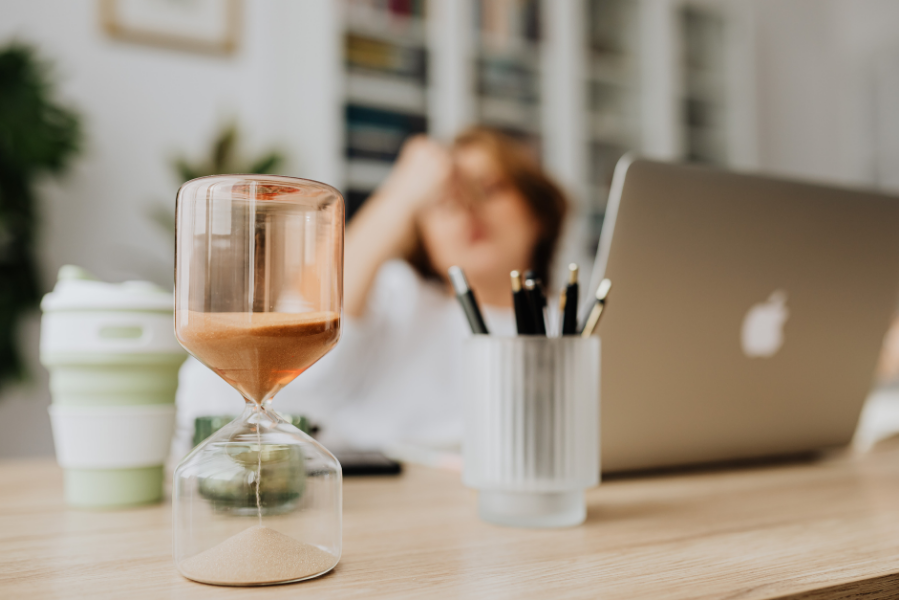
So, what does this all have to do with health? Everything. In our obsession with productivity and efficiency, we streamline every bit of our lives, including ourselves. Lacking the time (ahem, priority) to care for ourselves properly, we’ve started health-maxxing—treating our bodies like software that just needs another update or hack.
If there’s a shortcut to keep us humming along, producing, we want it, lured by the transformative promises dressed in clever branding. And when we inconveniently get sick, we do a system override and medicate it.
We have optimized everything to the point that it’s now working against us. We engineered our food system to produce more, boost palatability, grow profits, and flooded the market with disease-promoting ultra-processed foods.
We’ve automated our lives to save time and make things easier, yet somehow we’re busier than ever—moving faster, filling every spare moment, with no space to slow down and rest, or cook nutritious meals, or go for walks.
We’ve mechanized our jobs so we sit in front of computers all day, amidst an endless flurry of emails and Zoom calls. So we try to get a quick run in. The only problem is, the quick run doesn’t undo a day full of sitting.
We want to keep moving as fast as possible, working to make as much money as possible. So we Doordash. The privileged among us hire nannies and cleaners and landscapers–the opportunity cost of our time too great for those menial tasks. So all the trivial things, the reminders of our humanity—the things that slow us down—fade quietly into the background. In our delirious infatuation with technological advancement, and pursuit of optimization, we didn’t realize that we were digging our own graves.
I have known people, extremely overweight, who could not make time for eating healthy meals, regular workouts, or stress management, but raved about the wonders of colostrum. I’m picking on colostrum, but I could use any number of examples—bulletproof coffee, wellness shots, ashwagandha. Health, like most meaningful things in life, is not gained through hacks.
Yet we are in love with them. Food and supplement companies know it—and they’re milking it. They’ll sell us miracle products that promise to “heal” our bodies, increase our focus, boost our fertility, because they know we don’t have time for the habits that actually produce lasting health.
Hacks scratch our quick-fix itch, but often perpetuate poor health. They offer a placebo effect—appearing to move us forward while actually masking the root problems and delaying genuine healing.
If the problem was born from over-optimization, the solution is found in returning to simplicity.
Foundations of Lasting Health
Quick outcomes can be quickly lost. Health is built slowly, through unglamorous daily habits — the timeless practices we’ve lost touch with.
Colostrum isn’t going to save you if your entire life is out of whack. Health hacks don’t produce long-term health, but do put money in companies’ pockets. Don’t be a victim of marketing (said by a former food marketer—please forgive me for my sins 🙏🏼).
Focus on the main things. Make space in your schedule to care for yourself well.
These simple practices will help you honor your human design, spend less on healthcare, and feel better than hacks ever could!
Fuel Your Body
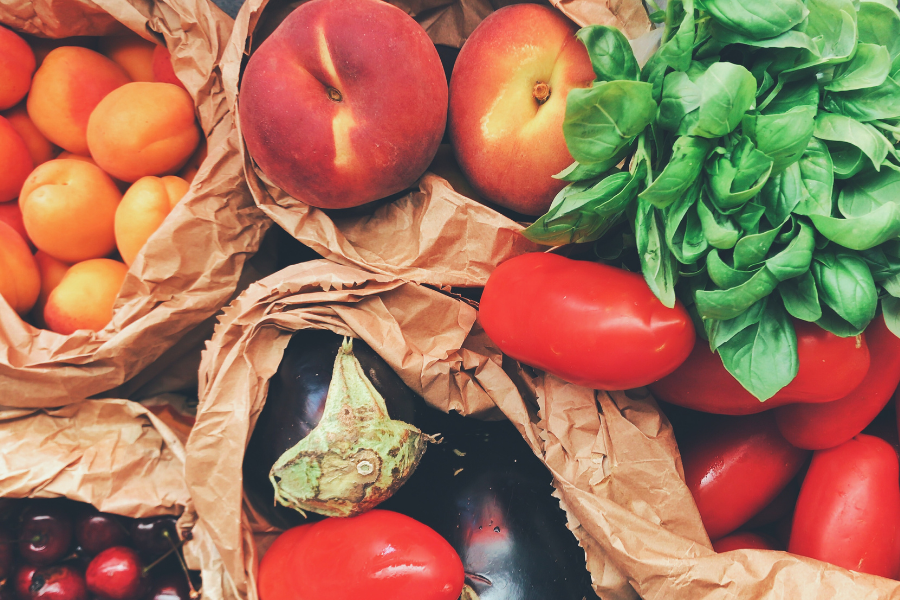
Nourish your body with real, whole foods:
Emphasize fiber (vegetables, legumes, nuts, seeds, fruit, whole grains)
Protein (25-30 grams/meal)
Healthy fats, especially Omega 3s (fatty fish like salmon, plus flax + chia seeds, and walnuts).
Complex carbs including starchy vegetables (e.g. sweet potatoes and squash), whole grains (such as quinoa and oats), legumes, and fruit
Whenever possible, choose organic (especially for the “dirty dozen”), grassfed/free-range organic for meat, eggs, and dairy, and wild-caught for fish. This will give you the most nutrients and the least toxins (ie. pesticides, herbicides).
Carbs need a friend! For more stable blood sugar, eat them with fiber/protein/fat
Limit processed foods, sugars, and refined carbs. Read food labels and choose wisely!
Move
Your body is designed to move. Regular movement sharpens your mind, balances your blood sugar, boosts energy, and improves sleep.
Start by simply walking, gardening, dancing, or doing something you enjoy for 30 minutes a day. Walking for 10-15 minutes after meals will help stabilize blood glucose.
Work up to 30 minutes/day, 5 days a week of moderate intensity exercise like jogging (any fitness tracker can measure this).
Integrate resistance training! This will build lean muscle, strengthen bones, and boost metabolism, helping you feel stronger and more energized. It also supports hormone balance, improves insulin sensitivity, and enhances mood and confidence. Incorporating resistance training has massive benefits, especially as we age.
Rest
Your body needs rest—7-9 hours of sleep each night. Plus a weekly rhythm of Sabbath, longer breaks throughout the year, and small pauses throughout the day. Do whatever you can to prioritize rest.
In addition to eating well and moving, here are some tips to help you get better sleep:
Eat dinner earlier
Create a soothing evening wind down routine
Shut down screens 1-2 hours before bed
Get morning sunlight (no sunglasses)
Other health-supporting practices include: drinking adequate water, managing stress, getting outside, connecting with loved ones, and incorporating joy and laughter! AKA doing things that were all normal and accepted for human functioning up until the last few historical moments in time.
While we’ve strayed from what we need to thrive, the resistance is rising up—people who are eschewing the streamlined system for a return to a slower, simpler, healthier life. I feel energized when I see the homesteading, gardening, chopping wood kinda folks doing their thing! You don’t need to go off grid to resist — start small, slow down, refocus on what matters, and watch life return!
Resist the cultural rip current of efficiency.
Beijos,
Lyn
If this resonated with you, you’ll love my newsletter.
It’s where I share more nurturing notes, gentle teaching, and honest reflections to support healing and living more gracefully.
I offer little drops here on the blog — but there’s much more sweetness waiting for you inside.
¹ Casey Means, Good Energy: The Surprising Connection Between Metabolism and Limitless Health (Avery, 2024).
2 Stanford Encyclopedia of Philosophy, “Ancient Ethical Theory,” https://plato.stanford.edu/entries/ethics-ancient/.
3 Department of Medieval Art and The Cloisters, “Private Devotion in Medieval Christianity,” Heilbrunn Timeline of Art History, The Metropolitan Museum of Art (October 2001), https://www.metmuseum.org/essays/private-devotion-in-medieval-christianity.
4 “Enlightenment,” Stanford Encyclopedia of Philosophy, first published August 20 2010; substantive revision August 29 2017, https://plato.stanford.edu/entries/enlightenment/.
5 Sarah Pruitt, “The Post World War II Boom: How America Got Into Gear,” History, A&E Television Networks, May 14 2020 (last updated February 18 2025),https://www.history.com/articles/post-world-war-ii-boom-economy.